You Don't Have to Love Playing the Same Way Your Child Does
Your child wants you to play with them.
Again.
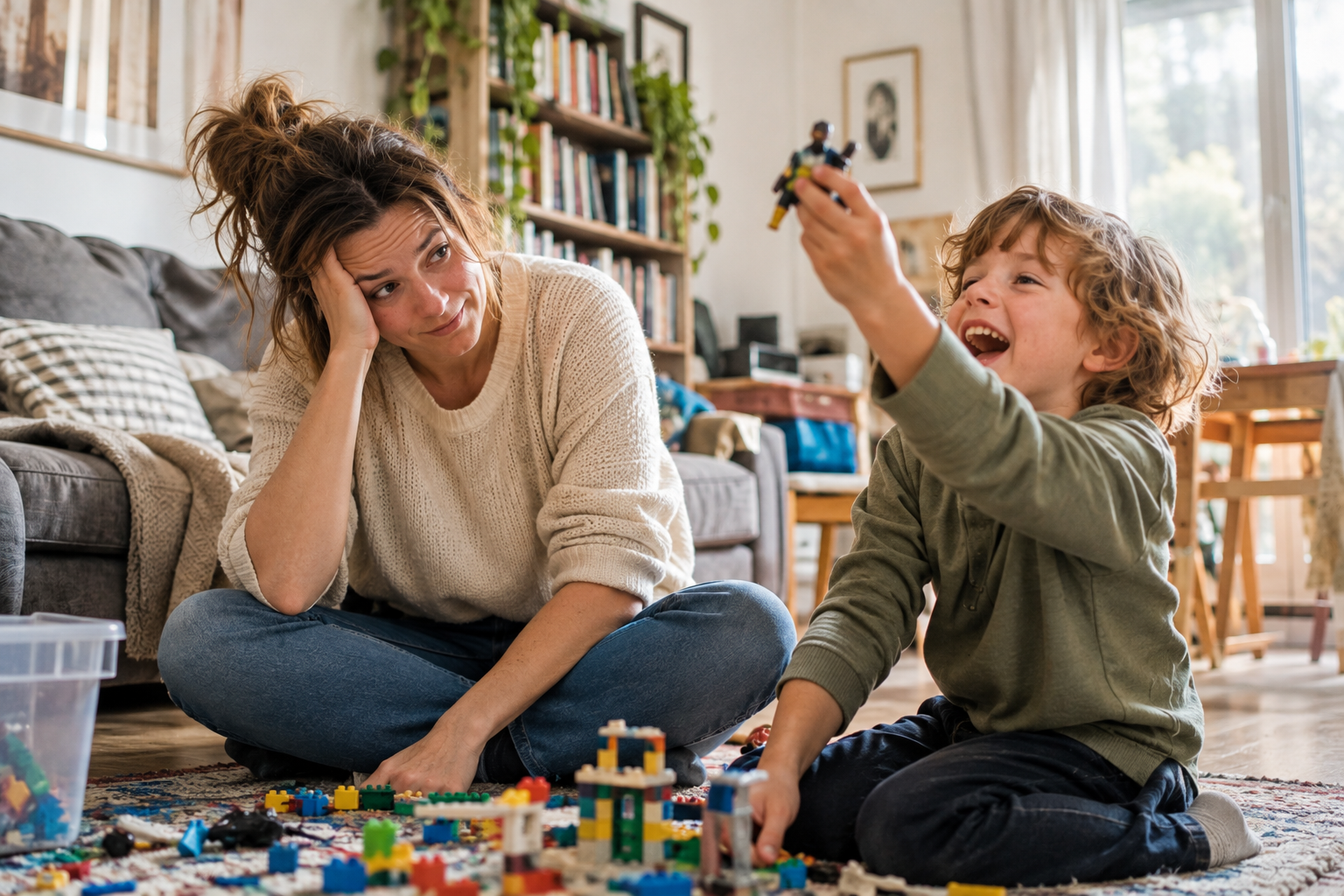
And while you genuinely enjoy spending time together, the thought of sitting on the floor and pretending to be a character in an elaborate game for the next 45 minutes sounds absolutely exhausting.
Maybe your child wants to wrestle, chase you around the house, or jump on the trampoline. Meanwhile, your idea of a lovely afternoon together involves reading on the couch, working on a puzzle, or taking a quiet walk.
Or perhaps you're the parent who loves getting outside and doing something adventurous, but your child wants to spend three hours arranging tiny figurines and narrating an imaginary world with approximately 400 rules you're expected to remember.
You love your child. You want to connect with them. You understand how important play is to their development and your relationship.
So why does playing together sometimes feel like such hard work?
Part of the answer may be that you and your child experience playfulness differently.
What Is Your Play Language?
When we think about play, we often picture the kinds of activities children enjoy: toys, games, pretend play, playgrounds, and running around being silly.
But playfulness is much broader than that. It's about the activities and experiences that bring us joy, curiosity, excitement, creativity, and connection.
And adults have those experiences, too.
Some people feel most playful when they're moving their bodies, exploring somewhere new, or doing something spontaneous. Others enjoy creating, building, organizing, learning, teaching, or immersing themselves in an imaginary world.
Some people love being the center of attention, making everyone laugh, and putting on a performance. Others feel happiest curled up with someone they love, sharing a book, or enjoying a peaceful afternoon without much excitement at all.
These preferences are what I like to think of as our play languages: the ways we naturally experience and express joy.
In my parent coaching curriculum, we explore 12 different play languages, including leadership, physical affection, learning and teaching, creativity, caregiving, stillness, adventure, structure, silliness, and fantasy.
These aren't rigid personality types or categories you have to fit into. You might recognize yourself in several of them, and your preferences can change depending on your energy, environment, and season of life.
The purpose is to get curious about what genuinely brings you joy.
Because somewhere along the way, many adults stop thinking about that.
When Did Playing Become Another Parenting Responsibility?
Think about the things you enjoyed doing as a child.
Maybe you loved making up elaborate stories, climbing trees, drawing, organizing games for the neighborhood kids, or reading for hours.
What happened to those interests as you got older?
For some of us, responsibilities gradually crowded them out. There were school assignments, jobs, household responsibilities, and eventually children of our own to care for.
For others, our natural interests weren't always appreciated by the adults around us.
Maybe you were the child who loved taking charge of games, but you were constantly called bossy. Perhaps you were energetic and adventurous, but adults frequently told you to settle down and stop being so loud.
Maybe you loved sharing everything you learned, but people called you a know-it-all. Or you preferred quiet, predictable activities and were told you needed to get out more and have some fun.
Children receive messages about which parts of themselves are welcome, and those experiences can influence how comfortable they feel expressing their interests later in life.
Of course, not every adult who dislikes pretend play has a painful childhood experience behind it. Sometimes you simply don't enjoy pretend play!
But I think it's worth considering whether you've become disconnected from activities that once brought you joy, especially if play now feels like something you do entirely for someone else's benefit.
When every playful interaction becomes another responsibility on your already full parenting list, it's understandable that you might begin feeling resentful or exhausted.
And that's particularly relevant for homeschool parents.
We spend so much of our day meeting our children's needs. We're teaching, preparing meals, managing schedules, helping with emotional regulation, and keeping everything moving. When our children ask us to play, it can feel like one more thing someone needs from us.
Rediscovering what playfulness looks like for YOU can help make room for enjoyment in a relationship that already involves so much caregiving and responsibility.
You and Your Child May Speak Different Play Languages
Let's say you naturally enjoy order, structure, and a slower pace.
You love planning your day, settling into familiar routines, and having enough time to enjoy an activity without feeling rushed.
But your child thrives on movement, excitement, and spontaneity.
They want to run, climb, explore, and change activities every ten minutes.
You can probably imagine how those different preferences might create tension.
Your child wants you to chase them around the house. You want to finish your coffee and enjoy a quiet morning. They keep asking you to come play, and you begin feeling irritated because their version of fun is exhausting to you.
Now imagine a different combination.
You love learning and teaching. You're genuinely excited to share something fascinating you've discovered, and you can't wait to explore it with your child.
But your child wants to make silly noises, invent ridiculous characters, and turn everything into a joke.
You may find yourself constantly redirecting them back toward the educational activity you planned, while they're trying to invite you into the kind of play that feels enjoyable to them.
Neither person is doing anything wrong by having different preferences.
But when we assume our children should enjoy the same things we do, or that we should naturally enjoy everything they enjoy, we can end up frustrated with each other.
And we may miss opportunities to appreciate the things that make each of us unique.
A child who loves leading games may be showing you their enthusiasm for organizing and directing a group. A child who wants to tell you every fact they've learned may be inviting you into their excitement about discovering something new. A child who spends hours creating elaborate imaginary worlds may be sharing something deeply meaningful to them.
We can appreciate those qualities even when they aren't our preferred way of spending an afternoon.
You Can Connect Without Forcing Yourself to Enjoy Everything
I think parents sometimes put an enormous amount of pressure on themselves to be endlessly available and enthusiastic about play.
If our child asks us to play, we feel guilty saying no. If we don't enjoy the activity, we worry that we're failing to connect with them.
And if we're already exhausted, the expectation that we should spend another hour doing something we don't enjoy can create resentment.
But our relationships with our children need room for both people.
Your child's interests matter. Your interests matter, too.
Sometimes you'll choose to enter your child's world because you know it's meaningful to them, even if it's not your favorite activity.
You might spend 15 minutes playing an elaborate pretend game, listening to them explain their latest obsession, or joining them outside for a game of tag.
And sometimes you can invite them into something that brings YOU joy.
Maybe you love baking, gardening, painting, playing board games, exploring nature, or reading together. Those activities offer opportunities for your child to experience a different side of you.
They get to see what excites you, what makes you curious, and what brings you genuine happiness.
You can also find places where your interests overlap.
A child who loves movement and a parent who loves learning might enjoy a nature scavenger hunt. A parent who enjoys structure and a child who loves silliness might create a ridiculous board game together. A child who loves physical affection and a parent who enjoys quiet activities might love curling up together for an audiobook.
And there will still be times when your child wants to play something you don't enjoy and you're simply not available.
You can be kind and connected while setting a boundary around your time and energy.
We want our children to learn that relationships involve respecting other people's needs and preferences, too.
What Does Playfulness Look Like for You Now?
I'd love for you to spend some time thinking about what brings you joy outside of your responsibilities.
What activities make you lose track of time? When do you feel curious, creative, energized, or deeply content? What did you love doing as a child that you haven't made time for in years?
Maybe your version of playfulness is adventurous and spontaneous. Maybe it's creative and expressive. Maybe it's peaceful, predictable, and cozy.
You don't have to turn those interests into educational opportunities or family activities to justify making time for them.
You are allowed to enjoy things simply because they bring you joy.
And when we make room for our own playfulness, we have more opportunities to share that part of ourselves with our children.
We can also become more intentional about entering their world, knowing that we're choosing to participate in something meaningful to them rather than feeling obligated to enjoy every minute of it.
Your child gets to be themselves in play, and so do you.
The more we understand and appreciate those differences, the more opportunities we have to build a relationship where both people feel seen, valued, and connected.
When Your Child's Behavior Is Getting in the Way of Connection
Sometimes finding ways to enjoy time together is difficult because so many interactions turn into arguments, refusals, or emotional outbursts. You may want to play and connect with your child, but you're struggling to understand why things keep becoming so challenging.
My Behavior Blueprint helps you take a closer look at one recurring behavior, explore what may be contributing to it, and understand how to better support your child. You'll receive a personalized written breakdown, a follow-up call, and 14 days of Voxer support.
Learn more about the Behavior Blueprint and see if it's the right next step for your family.