Do we actually know how to feel?

Your child is angry because you said no.
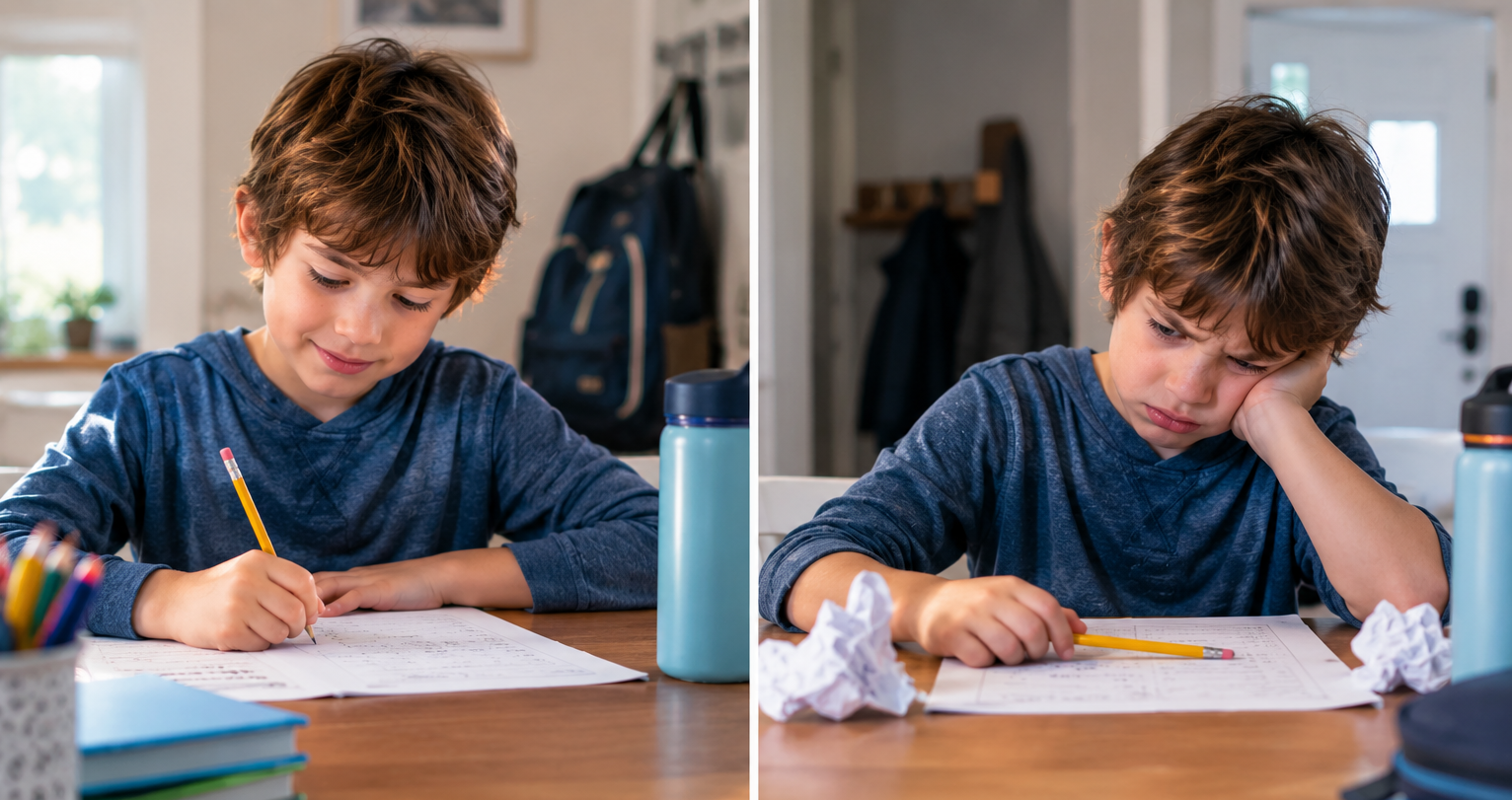
They’re crying because something didn’t go the way they expected. They’re anxious about something that seems completely manageable to you. They’re frustrated with their schoolwork and insisting they can’t do it. They’re disappointed about a change in plans and having a much bigger reaction than you expected.
And before you’ve had much time to think about it, you’re already doing something with their feelings.
You’re reassuring them. Explaining. Problem-solving. Reminding them why the boundary exists. Pointing out the bright side. Trying to help them calm down. Maybe you’re getting frustrated yourself because you’ve been talking about this for twenty minutes and nothing you say seems to be helping.
We spend a lot of time talking about teaching children emotional regulation, but many of us entered parenthood without having much experience just being with an emotion ourselves.
We learned to stop crying. To suppress big emotions deemed “too much.” To “get over it.” Told to just be grateful for what we had. Made to think logically about the situation. Told to go somewhere else until we could behave appropriately again.
We may have even had loving parents who genuinely wanted to help us feel better (or rather, help us “get past” the emotion.) They simply didn’t have many emotional tools themselves.
So now we’re raising children with big feelings while learning some of this alongside them.
What does it actually mean to feel something?
Marc Brackett, author of Permission to Feel, makes a distinction between intellectualizing our feelings and actually experiencing them.
And most of us are really good at the intellectual part.
We can explain EXACTLY why we’re upset.
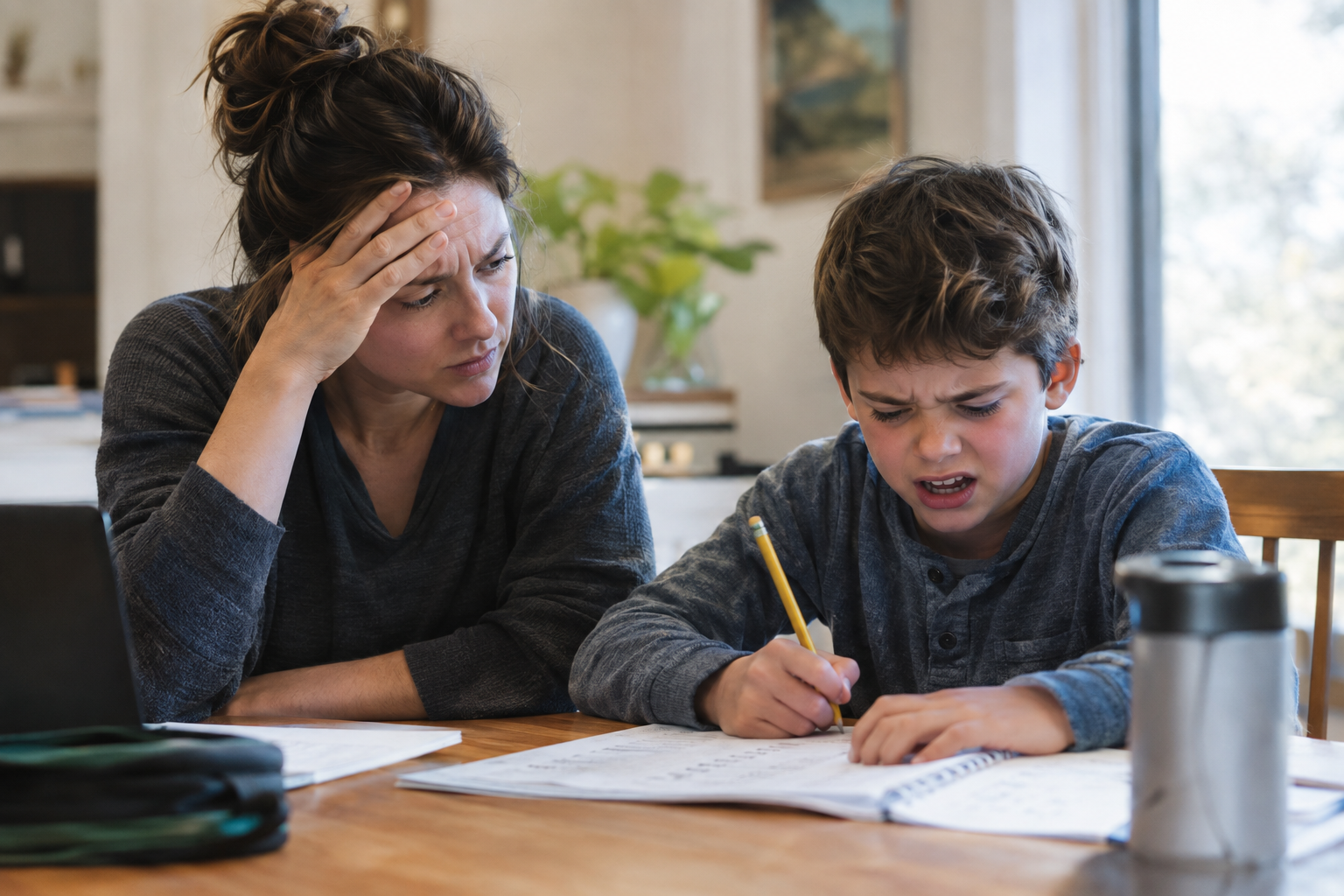
I’m frustrated because we’re already behind today, and I told him three times to get his math book, and now he’s arguing about the first problem.
We can analyze what happened. We can tell the story. We can identify who did what and why we think they did it.
Meanwhile, our jaw is clenched. Our chest feels tight. Our shoulders have crept toward our ears. Our stomach feels unsettled. We have an intense urge to make this interaction end.
The feeling is actually happening in our body before we’ve built the story in our head.
That physical experience IS part of feeling, and we have gotten really good at ignoring those feelings for the sake of logic.
This is where the first part of the F-E-E-L process begins: Focus on the physical sensation of the feeling.
Not doing something about it, not intellectualizing it. Just noticing what is happening inside of you; noticing the signals your body is sending you.
This connects to what we talked about recently with the nervous system thermometer. Your body is constantly giving you information. The tight jaw, racing heart, heat in your face, heaviness in your chest, or the urge to get away are part of your experience of the moment.
Before we can become curious about what an emotion is communicating, we have to be able to notice that we’re having it.
Feelings can be uncomfortable without becoming emergencies
This is where parenting can get particularly challenging.
Our child’s feelings create feelings in us.
Your child is devastated, and you feel an immediate pull to make them feel better.
Your child is anxious, and suddenly you’re attempting to settle their anxiety by focusing on the positive.
Your child is angry with you, and your own body begins preparing for conflict.
Your child says, “I hate you!” and now you’re thinking about whether you’re doing enough, whether homeschooling is working, whether they’re learning what they need to learn, and whether you’ve made the wrong decision.
Their emotional experience has now become yours too.
When we’re uncomfortable with what we’re feeling, we can become very motivated to change what our child is feeling.
We reassure. We explain. We tell them why it isn’t as bad as they think. We solve the problem. We defend our decision. We try to convince them that everything is okay.
And of course, there are times when children need reassurance, information, help solving a problem, or our perspective. The question is whether we’re offering those things because that’s what our child needs or because their emotion has become difficult for us to sit with.
The second part of FEEL is Embrace this moment as a temporary teacher, here to communicate.
An emotion can be uncomfortable and still be allowed to exist.
Your child can be disappointed that the answer is no. They can be angry about having to stop playing and start school. They can feel embarrassed about getting an answer wrong. They can be frustrated that something is harder than they expected.
You can feel irritated, worried, overwhelmed, disappointed, or angry too.
We don’t have to make every feeling disappear before we can decide what happens next.
Putting words to what’s happening
Once we’ve noticed the physical experience and allowed ourselves to stay with it, we can begin putting language to it.
The next part of FEEL is Expand into the left brain: invite three feeling words.
Maybe what initially felt like “I’m so mad” becomes frustrated, overwhelmed, and discouraged.
Maybe what looked like irritation has some anxiety underneath it.
Maybe you’re angry, embarrassed, and worried.
Having more precise language can help us understand the experience we’re actually having instead of immediately acting from the first emotion that gets our attention.
This matters with our kids too.
A child who says, “This is STUPID!” during math may be frustrated. They may also be embarrassed that they don’t understand it, worried that they won’t be able to do it, or disappointed because something they expected to be easy feels hard.
A child screaming about having to leave the park may be angry. They can also be disappointed, sad, tired, or overwhelmed by the transition.
We don’t need to interrogate children until we uncover the perfect feeling word. We’re helping them develop a richer understanding of their emotional world over time, and that begins with adults who are willing to be curious about emotions rather than immediately trying to make them stop.
What is this feeling communicating?
The final part of FEEL is Label the underlying need or needs.
Feelings carry information.
Anger can tell us something feels unfair, blocked, threatening, or out of our control. Frustration can tell us we’re struggling with something that matters to us. Anxiety can point toward uncertainty, safety, predictability, or a need for more information or support. Sadness can show us that something mattered and we’re experiencing a loss.
The need underneath a feeling doesn’t automatically determine what happens next.
Your child can need autonomy and still not get to decide whether school happens today. They can want connection while you also need ten minutes without someone touching you. They can desperately want another hour of video games while the boundary remains that gaming is finished for the day.
Understanding the feeling and need gives us information about what’s happening inside the person experiencing it.
And when we understand that, we have more options than simply reacting to the emotion itself.
If I realize that underneath my frustration with my child’s schoolwork is anxiety that they’re falling behind, I can recognize how easily that fear could make me push harder than the situation calls for.
If I realize that I’m feeling angry because my child’s refusal is bringing up a need for cooperation and support, I can acknowledge that need without turning their behavior into evidence that they don’t respect me.
If I recognize that I’m overwhelmed and need a few minutes of quiet, I can take my own need seriously instead of expecting my child to stop having feelings so that I can feel better.
Your child is learning from how feelings are treated in your home
Our children are learning what emotions mean long before they have sophisticated language for any of this.
They’re learning whether anger makes people pull away. Whether sadness needs to be fixed quickly. Whether anxiety is something to be ashamed of. Whether disappointment means a boundary will change. Whether another person can stay connected to them while they’re having a feeling that is loud, messy, inconvenient, or uncomfortable.
And they’re watching what we do with our own feelings too.
They don’t need to see a parent who is calm all the time. They need experience with emotions as a normal part of being human: emotions that can be felt, understood, expressed responsibly, and moved through.
That includes the emotions we would rather not have.
We can feel anger without yelling. We can feel overwhelmed and recognize that we need support. We can feel anxious without allowing the anxiety to make every decision for us. Our children can be furious about a boundary while we remain confident in holding it.
The feeling gets to exist. We still decide what we do with it.
For many of us, that is something we’re learning in adulthood because no one taught it to us when we were children.
So the next time your child’s emotion creates that immediate urge to fix, explain, reassure, correct, or make it stop, pay attention to what is happening in you too. Your body may notice it before you have words for it.
And perhaps there is something there worth listening to.