What Actually Matters to You as a Parent?

If I asked you what matters most to you as a parent, you could probably give me an answer pretty quickly.
You might say connection. Respect. Kindness. Faith. Independence. Responsibility. Honesty. Family. Maybe you want your child to grow into someone who is compassionate, confident, resilient, or willing to stand up for what they believe in.
But then Tuesday morning happens.
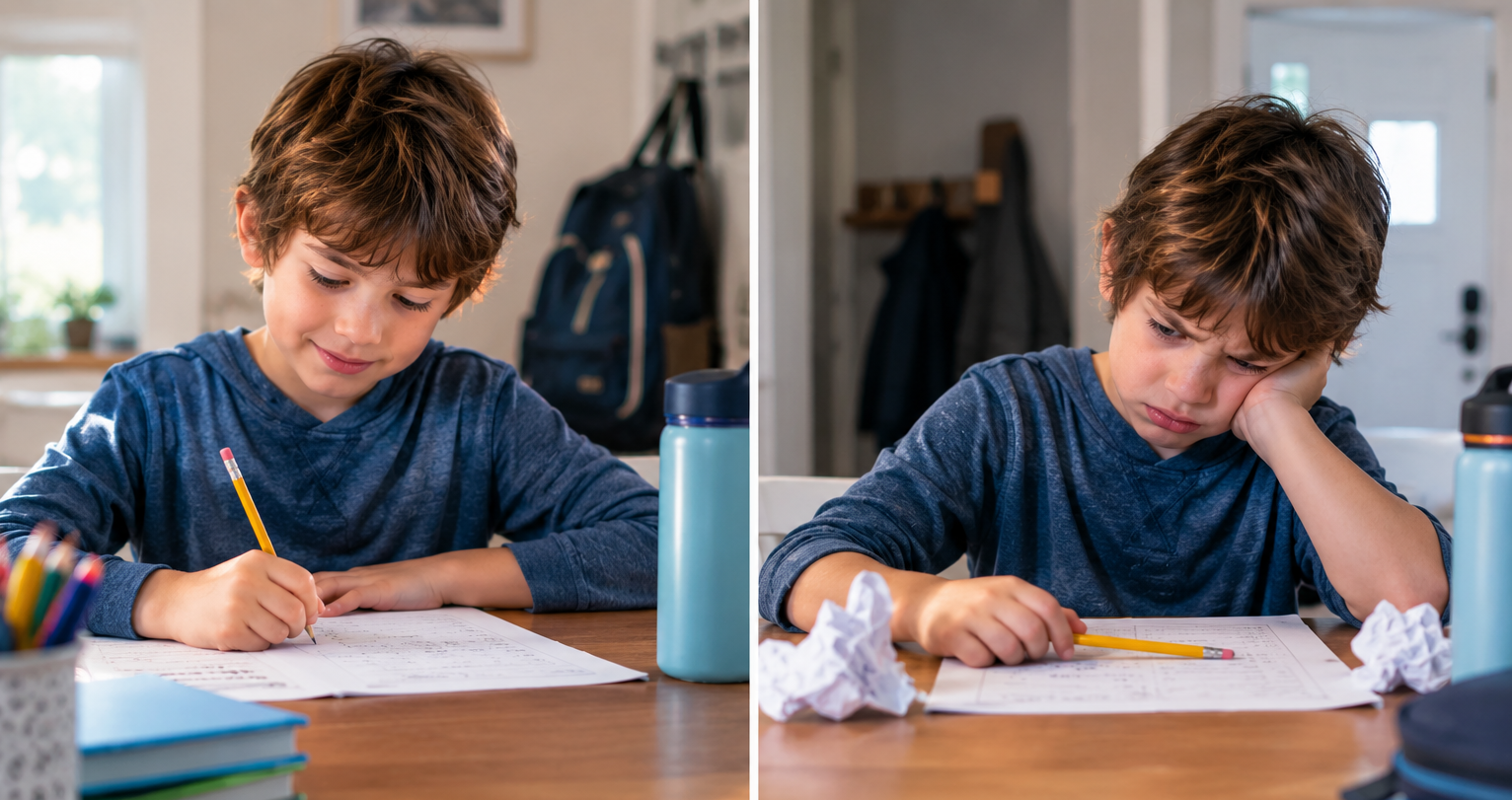
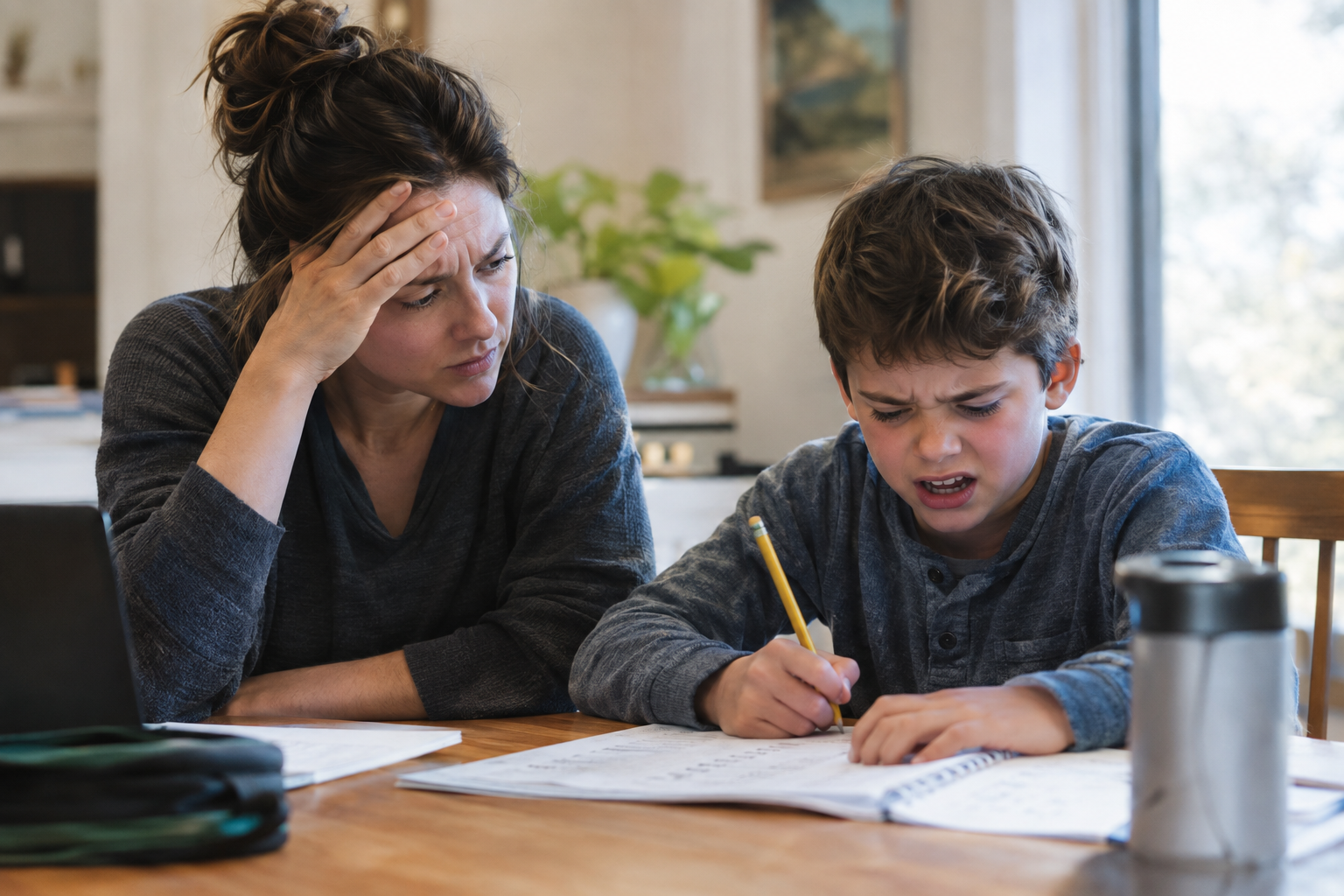
Your child refuses to start the lesson you planned. They snap at you when you remind them of their chores. Their sibling walks through the room and suddenly they're arguing about something that seems completely unrelated. You're looking at the clock because you need to leave in forty minutes, the lesson still isn't finished, and now you're wondering whether you need to be firmer because lately it feels like nobody listens until you've asked five times.
In those moments, the question of what matters to us can become much less clear.
Not because we've stopped caring about our values, but because parenting rarely asks us to live them under ideal conditions.
It asks us to live them when we're tired, embarrassed, worried, rushed, frustrated, or staring at a child whose behavior is bringing up every fear we have about whether we're doing this right.
We're always parenting from something
Every parenting decision comes from somewhere.
When you decide that a behavior needs a boundary, you're using something to determine that the boundary matters. When you decide to give your child more autonomy, you're making a judgment about what matters.
When you require an apology, change a homeschool expectation, intervene in a sibling conflict, insist that something gets done, or decide that something really isn't worth fighting about, you're drawing from beliefs about children, relationships, responsibility, respect, learning, family, and the kind of person you hope your child becomes.
The tricky part is that we don't consciously examine all of those beliefs before we use them.
Some came from the way we were raised. Some came from school, church, culture, social media, parenting books, or people we respect. Some developed because of experiences we've had with our particular child. And some are connected to fears about what will happen if we don't respond a certain way.
So we can find ourselves parenting from a belief without ever stopping to ask whether it actually reflects what matters most to us.
Maybe you were taught that respectful children don't question adults, but you also deeply value raising a child who can advocate for themselves.
Maybe independence matters to you, but you find yourself stepping in quickly whenever your child struggles because watching them struggle is uncomfortable.
Maybe you value connection and emotional safety, but when your child becomes angry, your own nervous system becomes so activated that ending the behavior feels more urgent than understanding what's happening.
Then we find ourselves parenting from a belief without ever stopping to ask whether it actually reflects what matters most to us. And when we notice that happening, it gives us an opportunity to get curious about where that belief came from and whether it's one we still want guiding us.
Values get complicated when two good things collide
A lot of parenting decisions would be easier if there were always one obviously correct value at stake.
Usually there isn't.
You may value both kindness and honesty.
You may value your child's autonomy and your responsibility to lead them.
You may value perseverance and knowing when something genuinely needs to change.
You may value family connection and personal boundaries.
You may want your child to respect other people while also wanting them to question authority when something feels wrong.
You may value academic growth while also believing that your relationship with your child matters more than completing today's worksheet exactly as planned.
These aren't necessarily contradictions. They're tensions.
And homeschooling gives us opportunities to bump into those tensions constantly because so many roles overlap. You're the parent, teacher, boundary-holder, safe person, schedule-maker, advocate, and person trying to figure out whether your child needs encouragement to persist or permission to stop.
Consider a child who becomes overwhelmed during a difficult lesson.
If perseverance matters to you, you might feel strongly that they shouldn't simply quit whenever something gets hard. That's reasonable.
If emotional safety and responsiveness matter to you, you may also recognize that pushing a child whose nervous system is completely overwhelmed isn't necessarily teaching perseverance.
Now you're not choosing between caring and not caring.
You're trying to figure out how two things you care deeply about can coexist.
Fear can sound surprisingly similar to a value
This is where I think the conversation gets especially important for parents of kids with big behaviors.
Because when behavior is intense, repetitive, public, disruptive, or simply exhausting, fear can become very loud.
If I let this go, they'll think they can get away with everything.
If I help them with this, they'll never become independent.
If I don't give a consequence, they won't learn.
If they talk to me this way at eight, what will they be like at sixteen?
If my child can't handle this now, how are they ever going to function in the real world?
Those fears don't mean you're doing anything wrong. They're often connected to very real hopes we have for our children. We want them to become capable. We want them to take responsibility. We want them to have healthy relationships. We want them to be able to function in a world that won't always accommodate them.
But fear tends to rush us toward the future.
Values can help bring us back to what we're actually trying to build.
If responsibility matters to me, I can ask what responsibility developmentally looks like for this child right now rather than reacting from fear that helping them means they'll never become responsible.
If respect matters to me, I can get more curious about what I mean by respect. Is respect immediate obedience? Is it speaking to each other with dignity? Does respect move both directions in our family? What do I want my child to understand about respect when they're eventually an adult in relationships of their own?
And that's why getting clear on our values requires more than choosing the words that sound right. We have to think about what those values actually look like in our relationships with our children.
Sometimes the behavior distracts us from the bigger picture
When you're living with a difficult behavior every day, it makes sense that stopping it starts to feel like the goal.
You want the morning arguing to stop. You want your child to stop screaming at their sibling. You want them to stop fighting every transition. You want to be able to say it's time for school without the entire house becoming tense.
Behavior matters. Sometimes it needs immediate intervention. Sometimes there are boundaries that need to be held, skills that need to be taught, environments that need to change, or expectations that need to become clearer.
But behavior can become so consuming that we start making decisions around How do I make this stop? without asking the larger question of What am I actually trying to build?
Those questions can lead us in very different directions.
If my only goal is to stop my child from arguing with me, I may prioritize whatever produces the fastest compliance.
If what matters to me is raising a child who can disagree respectfully, listen to another perspective, advocate for themselves, and remain connected through conflict, then I have a much longer developmental goal.
That doesn't mean I allow my child to speak to me however they want.
It means I'm thinking beyond eliminating the behavior in front of me.
I'm considering what I want them to be learning through our relationship.
Your values give your parenting somewhere to point
Last week, we talked about intentions: deciding how you want to show up when parenting gets hard.
But eventually we have to ask where those intentions come from.
Why do you want to remain curious?
Why does connection matter?
Why are you holding this particular boundary?
Why are you asking your child to persist here but choosing flexibility somewhere else?
There isn't one universal list of values that every family needs to choose. And even families who use the same words may mean very different things by them.
What's useful is becoming more conscious of what is actually guiding you.
Because there will be moments when your child's reaction makes you question yourself. There will be parenting advice that sounds convincing but doesn't sit right with you. There will be situations where two things you care about seem to compete with each other. There will be seasons when something that worked before no longer fits the child in front of you.
Values don't remove that complexity.
They give you something to orient yourself toward inside of it.
And perhaps that's the more useful question when you're deciding how to respond to your child's behavior.
Not only, How do I get through this moment?
But also, What matters to me here, and what am I hoping my child experiences and learns through the way I lead them?
Because we're not only trying to raise children who behave well in front of us.
We're raising people who will eventually carry what they've learned about themselves, relationships, responsibility, conflict, boundaries, compassion, and respect into a life of their own.