Learning to See Beneath the Behavior

One of the hardest parts of parenting children with big behaviors is that the behavior is usually the loudest thing in the room.
When a child is screaming, refusing, arguing, shutting down, or melting down, it's difficult to focus on anything else. The behavior immediately demands our attention. We want it to stop, and understandably so.
But one of the most important shifts I've made over the years is learning to ask a different question.
Instead of asking only, "How do I stop this behavior?" I've learned to ask, "What might be happening underneath it?"
That question has changed the way I see children.
As adults, we understand that our own behavior is influenced by what's happening inside of us. If we're stressed, overwhelmed, anxious, exhausted, embarrassed, frustrated, or hurt, it affects how we show up. We may become short-tempered, withdrawn, defensive, forgetful, or reactive.
Children are no different.
The challenge is that children often don't have the self-awareness, emotional vocabulary, or life experience to explain what's happening internally. Instead, those internal experiences tend to show up through behavior.
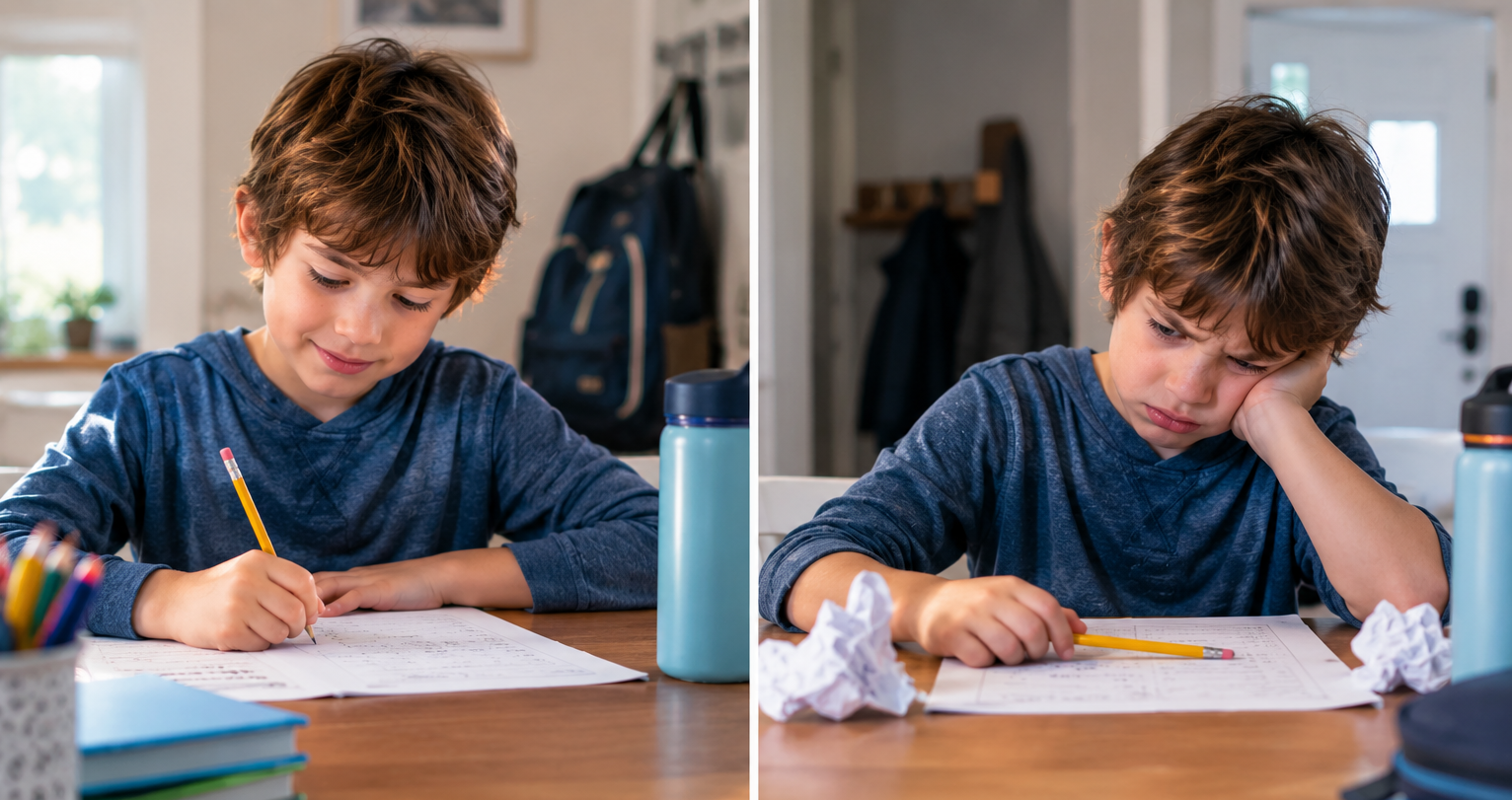
Sometimes a child who appears defiant is actually feeling powerless.
Sometimes a child who refuses schoolwork is carrying a tremendous fear of making mistakes.
Sometimes a child who lashes out at a sibling has been overwhelmed for hours and simply reached their limit.
And sometimes a child who seems completely unmotivated is actually discouraged, disconnected, or shutting down.
This doesn't mean every behavior has a hidden meaning that parents need to decode perfectly. It also doesn't mean children aren't responsible for their actions.
What it does mean is that behavior rarely tells the entire story by itself.
Why This Matters So Much for Homeschool Parents
I think homeschool parents face a unique challenge when it comes to behavior because we spend so much time with our children.
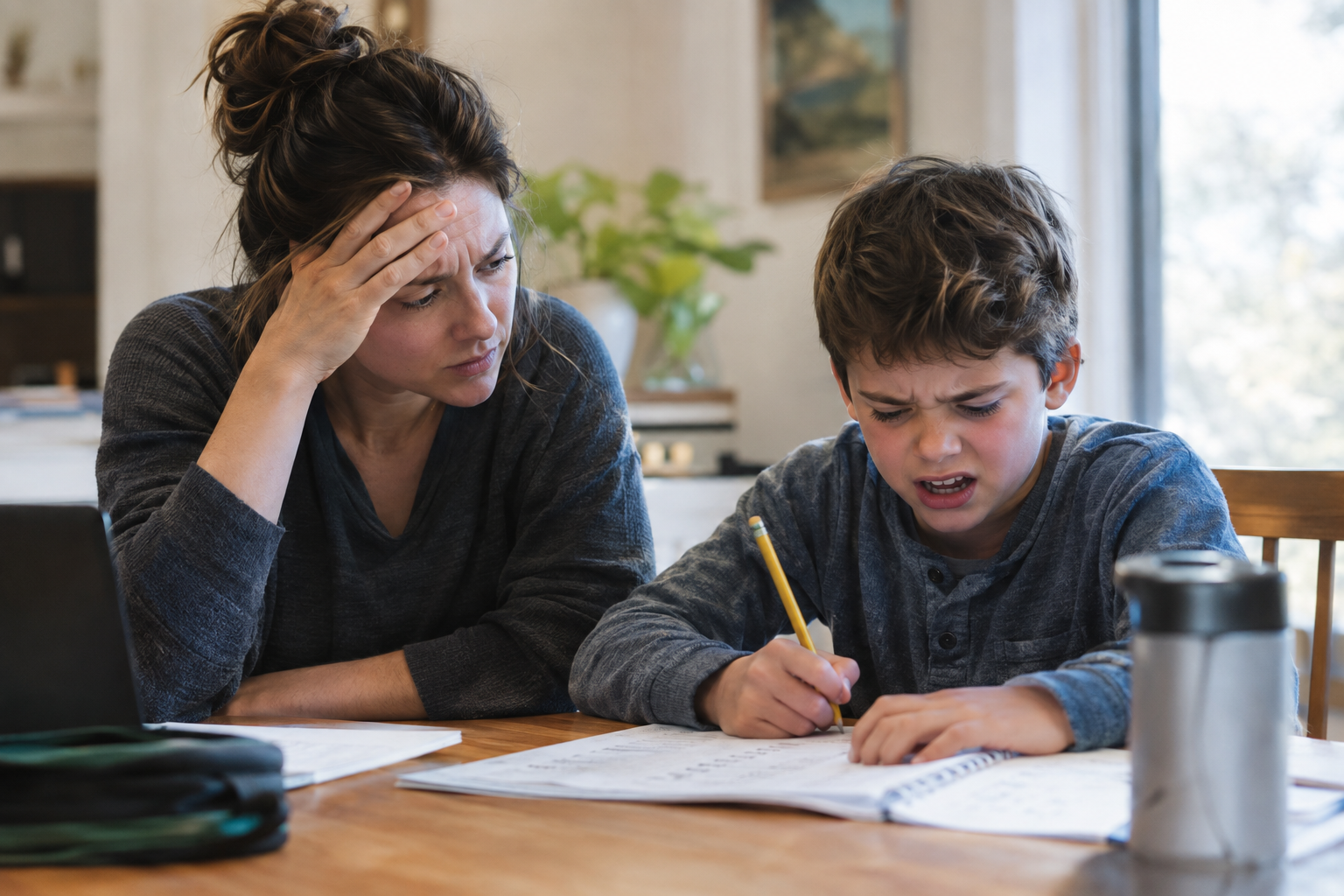
We're there for the math frustration, the sibling conflict, the difficult transitions, the emotional overwhelm, the resistance to writing, the tears, the arguments, and the meltdowns. We often see every hard moment, and when those moments happen day after day, it's easy to become hyper-focused on the behavior itself.
Sometimes parents start feeling like behavior is all they see.
The arguing becomes the problem. The refusal becomes the problem. The attitude becomes the problem.
But one of the gifts of homeschooling is that we also get the opportunity to know our children deeply.
We get to notice patterns.
Over time, we start realizing that the refusal isn't always about the schoolwork.
Sometimes the math battle isn't really about math at all. Sometimes it's anxiety about making mistakes.
Sometimes it's frustration with feeling behind. Sometimes it's mental exhaustion after working hard to stay regulated all morning.
The same thing is true for many of the behaviors parents bring to coaching.
The sibling conflict often isn't just about the sibling.
The explosion usually isn't about the thing that happened thirty seconds ago.
The resistance to getting started may have very little to do with motivation.
When we slow down enough to look beneath the behavior, we often discover that what appears to be one problem on the surface is actually something entirely different underneath.
And that understanding changes how we respond.
Not because we remove expectations.
Not because we stop holding boundaries.
But because we're responding to the whole child instead of only reacting to the behavior we can see.
Why Parents Often Miss What's Underneath
The truth is that this is much easier to talk about than it is to do.
When your child is yelling at a sibling, refusing schoolwork, or arguing with everything you say, your brain isn't naturally thinking, "I wonder what deeper struggle might be underneath this."
Your brain is usually thinking, "How do I make this stop?"
And that makes sense.
Behavior feels urgent.
When you're trying to homeschool, manage a household, care for other children, and get through the day, there isn't always space to pause and get curious.
Most of us were also raised to focus on behavior first. We learned to correct it, punish it, lecture about it, or make it stop. Very few of us were taught to become curious about what might be driving it.
That's why this shift often takes practice.
We're learning to look beyond the surface and ask different questions than we were taught to ask.
Seeing the Whole Child
One of the concepts I love from Dan Siegel's work is the idea that we can learn to see both the external behavior and the internal experience. We can pay attention to what a child is doing while also becoming curious about what they might be feeling, thinking, believing, or struggling with beneath the surface.
That curiosity changes things.
It helps us move from assumptions to understanding.
Instead of immediately concluding, "My child is trying to make my life difficult", we begin asking questions like:
- Could they be overwhelmed?
- Are they feeling disconnected?
- Is something making this harder than it appears?
- Do they have the skills they need for this moment?
Notice that none of those questions remove boundaries or expectations.
They simply help us respond with more information.
In many ways, this is what emotionally intelligent parenting looks like. We learn to see the whole child rather than only the behavior they're displaying in a difficult moment.
The behavior still matters.
The boundaries still matter.
The expectations still matter.
But understanding the story underneath the behavior often gives us a much clearer path forward.
Because when we can see beyond what is happening on the surface, we are often able to respond not just to the behavior itself, but to the child who is struggling beneath it.
The more I work with families, the more convinced I become that behavior is often information. It's a clue. It's communication. It's one of the ways children show us what their nervous system is experiencing when they don't yet have the words to explain it themselves.
When we begin looking through that lens, our questions start changing. Instead of asking, "How do I stop this behavior?" we begin asking, "What is this behavior telling me?" And instead of assuming every difficult moment is a character issue, we become curious about whether it's a capacity issue.
That shift doesn't solve every problem overnight. But it often helps parents move from frustration to understanding, and from reacting to responding.
And in my experience, that's where meaningful change usually begins.